
A Weekend in Sakleshpur - Coffee, Stays and the Case for a Second Home
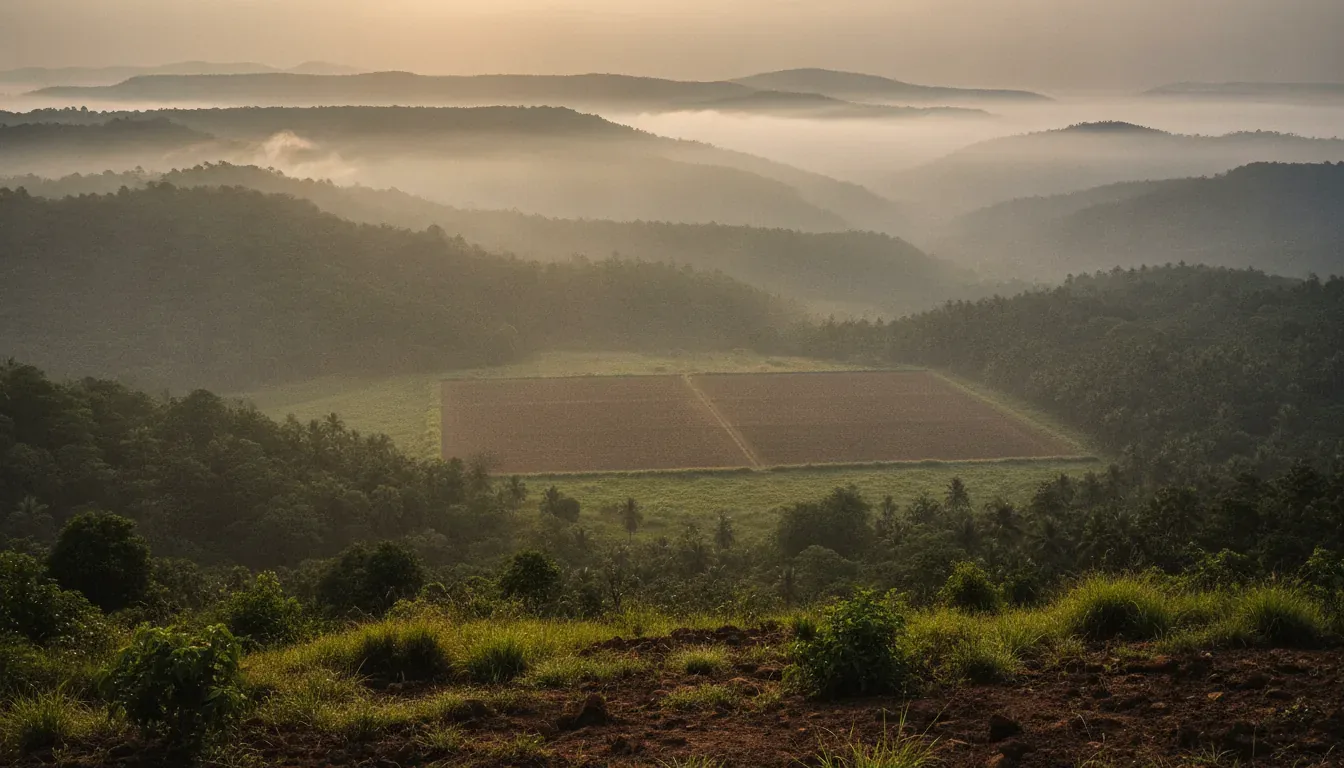
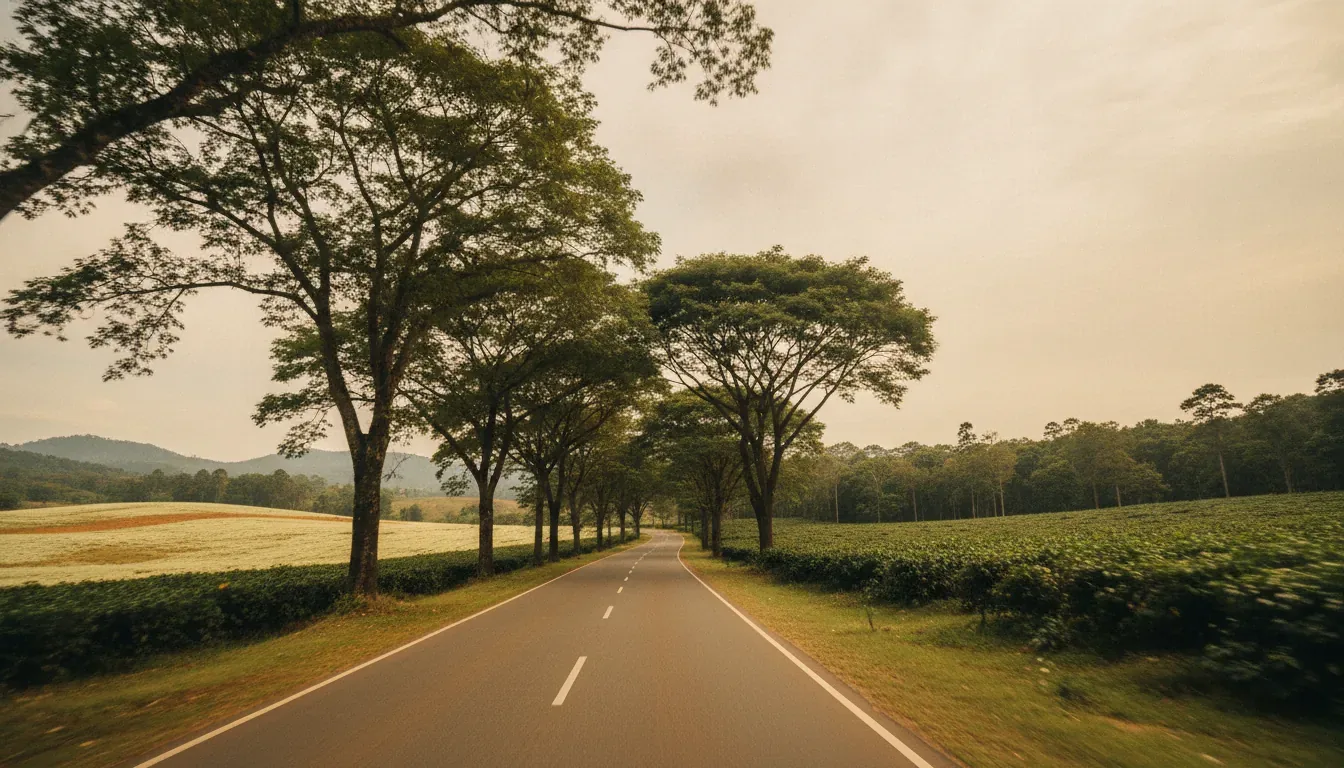
NH 75 past Hassan slowly turns into coffee country. The open fields give way to coffee bushes growing under tall shade trees, the hills close in, and in the monsoon months mist sits low over the green. This is the road to Sakleshpur, a coffee town in Hassan district in the Western Ghats, about 932 metres up and roughly four to six hours from a Bengaluru Friday. The estates around it are planted with coffee, pepper, cardamom and areca.
Most people come for a weekend and go home happy. The harder question, and the one this guide is about, is whether you would want to come back every month or two, in the rain, with the people you would share a second home with. A good weekend and a place you keep returning to are two different things, and a weekend is a fair way to find out which one Sakleshpur is for you.
One thing to say up front: Vibez Estates runs coffee estates and a resort in Sakleshpur. Where this guide recommends our own stay, it says so plainly, so you can judge it for yourself.
Here is the whole weekend in brief, before we take it in order.
What does a Sakleshpur weekend actually look like
A Sakleshpur weekend from Bangalore is a two-day trip of about 220 to 240 km each way on NH 75, roughly four and a half to six hours on the road each way. Leave early, spend a full day on a coffee estate and at Manjarabad Fort or a viewpoint, and expect heavy rain from June to September.
Sources differ on the exact figures. Google's summary gives 220 to 240 km, redBus gives 241 km, and StayVista puts it at about 220 km. The drive also takes longer from a Bengaluru Friday evening than from a Saturday dawn.
The dry months, roughly October to March, are the easy ones. The monsoon, roughly June to September, is the greenest and the wettest. Where you stay shapes the trip too: a night on an estate means you see the coffee first thing in the morning. And the real result comes on the drive home, when you find out whether you would happily do it all again.
It all starts with the drive, and when you leave decides most of it.
How far is Sakleshpur from Bangalore, and when should you leave
Sakleshpur is about 220 to 240 km from Bangalore by road on NH 75, usually four and a half to six hours by car. Leave before the city traffic builds, or take a morning train.
The Bangalore to Sakleshpur route is one highway the whole way:
- Bengaluru to Nelamangala, the slow stretch out of the city
- Nelamangala to Kunigal and on to Channarayapatna
- Channarayapatna to Hassan
- Hassan to Sakleshpur
When you leave matters more than the distance. The same road is two different trips. A Friday-evening start means crawling through the Bengaluru exit after a working day and arriving well after dark. A Saturday start at first light gets you out before the city wakes, and the Bengaluru exit is where a Friday evening loses the most time.
The train is a real option if you would rather not drive. Trains run from KSR Bengaluru and Yesvantpur to Sakleshpur railway station (SKLR) in about four to five hours. Sources disagree on how many run each week, so check the current timetable before you plan around one.
The monsoon is the other thing to plan around. The ghat section of NH 75 west of Sakleshpur, on the way down to Mangaluru, has a record of landslides:
- On 30 July 2024, The News Minute reported a landslide at Doddathappale near Sakleshpur that backed traffic up for many kilometres for several hours. It was the third slide that month, and after the slide on 18 July the district administration allowed vehicles through the ghat only between 6 am and 6 pm.
- On 16 August 2025, Daijiworld reported landslips along the Shiradi Ghat stretch that shut traffic completely near Maranahalli, and Bengaluru-bound trains were rerouted.
Coming from Bengaluru, you reach Sakleshpur town before the ghat, so these slides mostly affect the road beyond it. Whether that matters for your stay depends on which side of town it sits.
If you are travelling in July or August, check the current NH 75 advisories before you set out.
Where should you stay for a weekend in Sakleshpur
Stays in Sakleshpur come in three kinds: resorts, family-run homestays, and stays on working coffee estates. For a weekend that is also a test of the place, a stay on an estate shows you the coffee, the quiet and the weather at first hand.
- A resort gives you a restaurant, rooms and activities in one place, with the least planning.
- A homestay is a family-run stay in a local home, smaller and more personal.
- A coffee-estate stay puts you on a working farm, with the plantation around you when you wake up.
Whichever you pick, run one practical check. Under the 2025 guidelines, paid homestays and farm-stays in Karnataka must register with the Karnataka Tourism Department, and the certificate is valid for five years. Ask to see the homestay registration before you book, and prefer a stay that has it.
Our own stay is Ashvana. We run it, so weigh this recommendation accordingly. Ashvana is a Vibez Estates resort on a 20-acre nature reserve in Sakleshpur, with cottages, a restaurant that serves Malnad dishes, coffee plantation walks and coffee tasting.
On an estate, the best part of the day is usually a walk through the coffee.
What is there to do on a Sakleshpur weekend, beyond the viewpoints
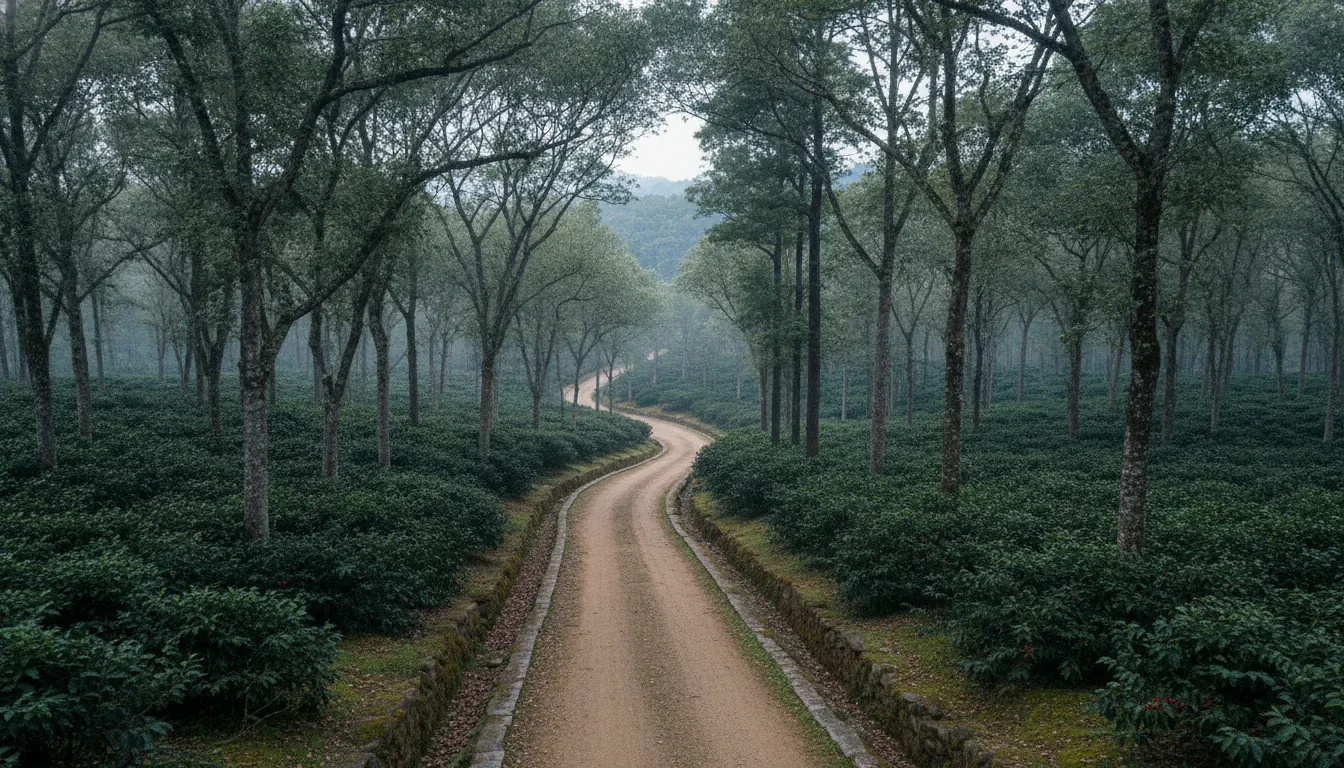
An estate walk is a slow walk through coffee growing under taller shade trees, with pepper vines climbing them, and it is the one thing in Sakleshpur you cannot do from a viewpoint. Start the day there, then give the afternoon to one or two places nearby, such as Manjarabad Fort.
On a Vibez estate, the walk takes you through Arabica coffee and black pepper growing under silver oak shade. It shows you what the land in these hills is for, which no view from the road can. At Ashvana, coffee plantation walks and coffee tasting are part of the stay.
For the second half of the day, a few places sit close to town:
- Manjarabad Fort, an eight-pointed, star-shaped fort on a hillock near Sakleshpur, built by Tipu Sultan in 1792.
- The Sri Sakaleshwara Swamy Temple, which gives the town its name.
- The Hemavathi river, which runs through Sakleshpur.
- Bisle Reserve Forest, the protected forest in the green belt around the town.
One thing not to do: the railway line from Sakleshpur towards Yedakumeri, known as the Green Route, is a working track, not a trail. Walking it has been reported as banned. Do not walk the railway line.
How much of this you can do depends heavily on the month you come.
When is the best time to visit Sakleshpur, and when should you not come
The best time to visit Sakleshpur, for most weekend visitors, is the dry months, roughly October to March. June to September is the monsoon, the greenest and wettest stretch of the year, with July alone averaging about 835 mm of rain.
Sakleshpur gets about 2,178 mm of rainfall in an average year, and most of it arrives in the monsoon: about 835 mm in July and about 431 mm in August. That rain is what fills the waterfalls and turns the estates their deepest green. It also brings leeches on the trails, slippery paths and fog that can hide a viewpoint for a whole morning. Most visitors carry salt or an anti-leech spray.
Sources disagree on where the good season ends. MakeMyTrip suggests October to March, while some trek operators prefer June to December for the waterfalls. Both are describing the same trade: dry roads and clear days, or full falls and heavy rain.
The coffee keeps its own calendar, and it is worth planning a visit around. The coffee blossom on our estates comes in , and the coffee harvest runs in.
As for when not to come: if you are travelling with small children, or you need to be sure the road will be open on Sunday, avoid the peak monsoon weeks of July and August. That is our advice, drawn from the landslide record on the ghat road, not a rule.
The rain is only one of the things a brochure leaves out.
What is quiet, wet or inconvenient about Sakleshpur
Sakleshpur is a small hill town in heavy-rain country, far from the city's conveniences, and the same quiet, rain and distance that make a good weekend also make it hard work in some months. The main inconveniences are the drive, the monsoon rain and road, leeches, a patchy mobile network and the quiet itself.
- The drive comes with every visit, the tenth as much as the first. Four and a half to six hours each way is the cost of each weekend.
- The monsoon brings weeks of heavy rain and a place that stays wet, with leeches on the trails and fog at the viewpoints.
- The ghat road on NH 75 beyond Sakleshpur was blocked by landslides in July 2024 and shut completely in August 2025.
- The mobile network and power in the hills can be patchy. The nearest hospital is . Hassan, the district headquarters, is the nearest large town on the Bengaluru side.
- It is a small town, and not much stays open late.
Then there is the quiet. For some visitors it is the whole reason to come. For others, by the second evening it starts to feel like there is nothing to do. Both reactions are worth knowing about before you spend anything, and neither shows up in a photograph.
Which is exactly why a weekend here is a better test than any brochure.
What does a weekend tell you about living here
A weekend in Sakleshpur is a small, cheap test of a much bigger decision. If you would happily do the drive again next month, in the rain, with the people you would share a second home with, the idea is worth taking further; if not, the weekend has saved you from an expensive mistake.
On the drive home, ask each other:
- Would we do this drive again next month?
- Would we come in the monsoon, or only in the dry months?
- Did the children, or the person we would share it with, enjoy it, or just put up with it?
- Did the quiet feel like rest, or like nothing to do?
- How often would we really come back, and who would look after the place in between?
If the answers are mostly yes, it helps to know what living here part of the time involves. Farmland plots here are measured in acres and guntha, and one acre is 40 guntha. Building a house on agricultural land usually needs DC conversion, the order that changes the land's permitted use, so a second home here is a paperwork question as well as a lifestyle one. And someone has to run the land while you are in Bengaluru.
One answer to that last question is managed farmland, where the owner holds the title to the plot and an operator runs the estate. Vibez Estates works that way, and in our words: "You own it. We work it." We are one of several operators around Sakleshpur, and a weekend is not the time to decide. If you do get further, you can ask to speak to an existing owner.A few questions come up from almost everyone planning this trip.