
DC Conversion in Karnataka - Verify Before You Buy
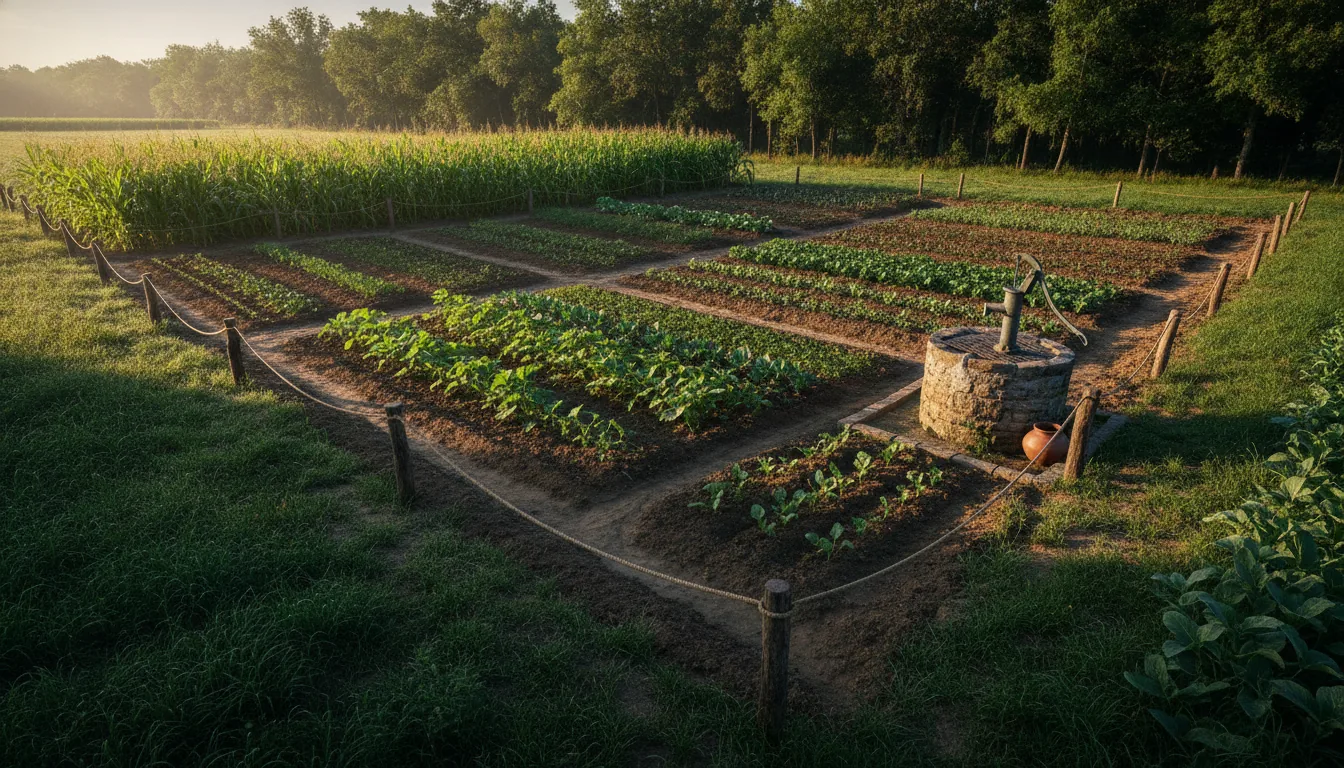
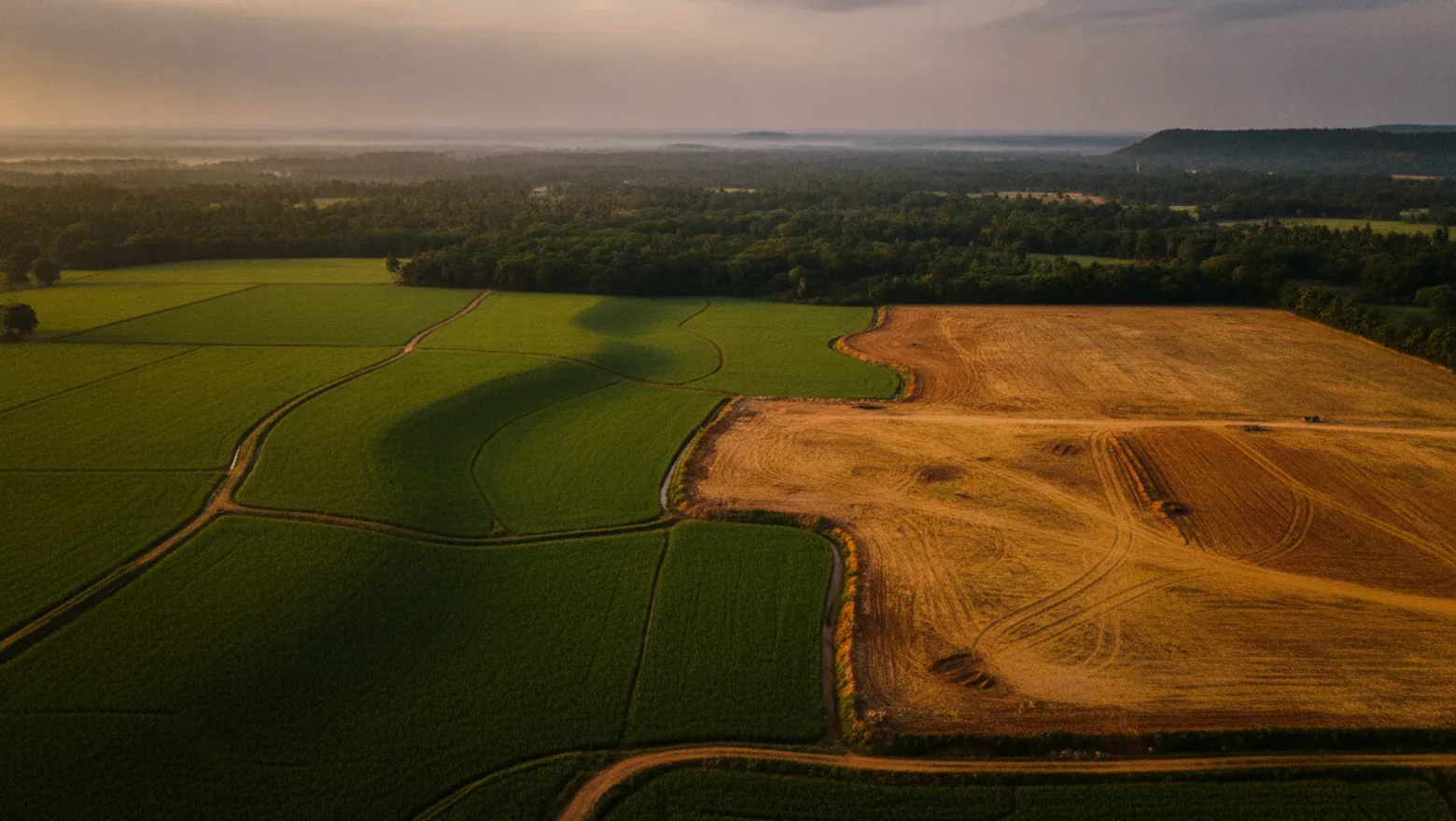
You are shown a farm plot or a villa plot near Bengaluru, and the seller calls it ready to build on. The revenue records for that same land may still classify it as agricultural. That gap between how the land is being used and how it is officially authorised is the buyer’s problem to catch, not the seller’s to disclose.
In Karnataka, about 93 percent of land in non-agricultural use has no conversion record on file. The figure comes from a Karnataka Revenue Department exercise that matched Aadhaar to land records: 72.11 lakh parcels are in non-agricultural use against only 4.69 lakh recorded as officially converted, reported by Deccan Herald on 7 January 2025. That does not mean nine in ten plots are illegal. It means the record often lags the ground, and the only way to know which side your parcel sits on is to check whether a Deputy Commissioner ever converted it.
The check starts with knowing exactly what DC conversion changes about a parcel, and what it does not.
The short answer, DC conversion is a Deputy Commissioner order that changes a parcel’s authorised use from agricultural to non-agricultural. Without it, building on the land or selling it as a residential plot is irregular, whatever the seller says.
The authority to grant it sits with the Deputy Commissioner under the Karnataka Land Revenue Act (Section 95 across current sources, last verified [FACT-GAP: publish date]). The one check a buyer should run to verify it: confirm that a conversion order exists for that exact survey number on the Karnataka land-conversion portal, and that the RTC and the Khata reflect it, before any money changes hands. Whether the record shows conversion is what decides what the parcel is actually permitted to become.
What is DC conversion, and why does it decide how you are allowed to use the land
DC conversion is an order from the Deputy Commissioner that reclassifies a specific parcel from agricultural to a stated non-agricultural use. It is what makes residential, commercial or industrial use of that parcel lawful.
In Karnataka, land is treated as agricultural by default unless a conversion order changes it, a position set by the Karnataka Land Revenue Act and repeated across the current search results, including the Google AI Overview and 1acre.in read on 26 August 2026 (Section 95 is the section cited; last verified). What the order changes is the authorised use recorded for the parcel, the classification that shows on the RTC, not the physical activity happening on the ground. A field can grow nothing and a plot can already have a compound wall, and neither fact converts the land; only the order does.
That is why conversion is required before the land is built on or sold for a non-agricultural purpose, such as the villa plots and farm plots marketed around Bengaluru. The practical weight of the status shows up the moment you compare what agricultural land and converted land each let you do.
Agricultural or converted - what each status actually lets you do
Agricultural land in Karnataka is lawful for farming and allied activity. Building a residence on it, or selling it as a non-agricultural plot, needs DC conversion first.
Converted land is permitted for the specific non-agricultural use named in the order, for example residential. The order is not a blanket pass: a residential conversion authorises residential use, not a commercial or industrial one. This distinction carries through to the local records. A property with a clean conversion behind it can hold an A-Khata, which reflects a compliant, tax-and-records-clean property and supports a bank loan. A property in non-agricultural use without that backing tends to sit on a B-Khata, which flags it as irregular (Industry Regulatory layer, Tab 11). The full comparison of A-Khata, B-Khata and the newer e-Khata is a subject of its own; the point here is only the link: conversion is what lets a Khata be clean.
Because a seller can simply assert that a parcel is converted, the buyer needs a way to check the claim rather than accept it.
How do you check whether a conversion order exists for this exact survey number
A conversion order is recorded against the survey number and is retrievable by the public, which means you can verify it yourself before you rely on a seller’s copy. Three checks, in order, confirm whether the non-agricultural use of a given parcel is authorised by a DC conversion, or whether it is still agricultural on the record:
- Search the Karnataka land-conversion portal: The state portal at landconversion.karnataka.gov.in runs a Final Order Report that holds the consolidated conversion final orders, searchable by request id, survey number or district. It ranks near the top of the search results because it is the government’s own record of what a Deputy Commissioner has actually converted (portal read 26 August 2026; confirm the current path and label at publish).
- Read the RTC on Bhoomi: The RTC, also called the Pahani, is pulled from the Bhoomi portal. Check whether it reflects the current land use and any conversion, and whether the owner named on it matches the person selling to you (Industry Regulatory layer, Tab 11).
- Read the conversion order copy against the parcel: When the seller hands you an order, do not stop at seeing that it exists. Confirm that the survey number, the extent converted, the sanctioned use and the order date on that document match the exact parcel being sold to you.
If any of the three does not line up, the safe reading is that the parcel is not yet proven, and the next question is what a skipped check can cost.
What does irregular non-agricultural use expose a buyer to
Irregular non-agricultural use, meaning use that is not backed by a DC conversion order, can block a bank loan, a clean Khata and a clean resale, and it can invite a penalty, and in some cases a demolition or a challenge to the use. How far any of that goes depends on the parcel and the authority involved, so treat this as the exposure a buyer carries, not a prediction of what will happen.
On the records side, unconverted non-agricultural use typically sits on a B-Khata rather than an A-Khata, and that alone affects loan eligibility with most banks (Industry Regulatory layer, Tab 11; Google AI Overview, 26 August 2026). On the enforcement side, building without conversion can draw penalties, and in some cases demolition or a challenge to the use (Google AI Overview, 26 August 2026); the outcome is parcel-specific, not automatic.
This is also where the 93 percent records gap should be read correctly. A plot that looks converted may still lack a conversion record on file (Deccan Herald, 7 January 2025). That is a reason to verify the specific parcel, not a reason to assume the worst about it. Even a parcel with a real conversion order can carry two flaws that a quick look misses.
Partial and lapsed conversions - the two traps that pass a quick glance
A conversion order can be partial, covering only part of a survey number, or lapsed, where the sanctioned use was not acted on within the period the order set. Either one can leave the specific plot being sold to you effectively unconverted, even though a genuine order exists.
A partial conversion is the first trap. When only part of a surveyed extent is converted, a sub-plot that falls outside that converted extent is not covered by the order at all. The defence is straightforward: read the extent stated in the order and match it against the exact plot on the ground, rather than treating the order as covering the whole survey number.
A lapsed conversion is the second. A conversion sanctioned for a use that was not commenced within the period fixed in the order can lapse, which means an order that was validly issued may no longer be live. The defence is to verify that the order is current, not merely that it was once granted.
Both traps share a lesson: a DC conversion is only one of three separate permissions that buyers routinely blur together.
Conversion, khata and building plan - three different permissions, routinely confused
DC conversion, a khata and a sanctioned building plan are three separate approvals from three different authorities. Holding one does not prove the others, and a seller under pressure may show whichever one is easiest to produce.
A DC conversion, granted by the Deputy Commissioner, proves that the authorised land use was changed to non-agricultural. It does not, on its own, prove a clean khata or an approved plan. A khata proves that the property is recorded for tax and ownership with the local body: an A-Khata for a compliant property, a B-Khata for an irregular one. It is a records entry, not the conversion order. A building plan sanction proves that the specific construction has been approved, and it is separate again from both conversion and khata (Industry Regulatory layer, Tab 11).
Reading each permission for what it actually proves is what stops a buyer accepting one document as evidence of another. The clean way through all three is to collect the full document set before you commit.
What to hand your advocate before you commit
Your advocate can clear a parcel quickly when the records are ready to read. Assemble the core set before the meeting, not after: the DC conversion order, the latest RTC (Pahani), the EC, the Khata and a PTCL check, and where the plot comes from a sub-division, the 11E sketch.
Each document answers a different question. The DC conversion order settles the land use. The RTC shows current use and ownership. The EC, the Encumbrance Certificate, shows whether the property carries a mortgage or a charge. The Khata shows how it is recorded with the local body. The PTCL check matters more than it looks: the 2023 PTCL amendment removed the time-bar on restoration claims, which means even an old, clean-looking chain of title can be reopened and challenged (Industry Regulatory layer, Tab 11). Handing your advocate a complete set of these documents up front is what turns a slow, back-and-forth review into a quick one.
This is also where the difference between sellers shows. A developer with a delivery record behind it can produce these records on request rather than over weeks. Vibez Estates has been operating since 2009, seventeen years, with 25+ projects delivered and about 1,100 acres under management (as at). Its advocate document pack is a pre-assembled, indexed set of the title and due-diligence records handed over on request, so your lawyer is not left waiting on the seller. If you want that set for a parcel you are weighing, you can ask for it before you commit.