
If you are about to buy or sell agricultural land, the tax on it is probably one of the first things you want to pin down. That instinct is right. The trouble is that a clear, current answer is harder to find than it looks.
This guide explains what actually decides the income tax on agricultural land, what to gather before you act, and how to get an answer you can rely on for your own situation. It is general information to help you prepare. It is not tax advice, and it does not tell you what you will owe. For that you will want a qualified Chartered Accountant (CA) looking at your specific land and your own position.
One reason this matters more than usual right now: much of what you will read online about this topic may already be out of date.
Why the tax answers you find online may be out of date in 2026
The Income-tax Act, 1961 was replaced by the Income-tax Act, 2025, which came into force on 1 April 2026. That single fact changes how you should read almost everything written about tax on agricultural land.
Most of the guides, articles and even the answer box at the top of a Google search still lean on section references from the old 1961 Act. You will see pages built around Section 54B or Section 10(1). Those are references to a law that has now been replaced. They may still describe the right idea, or they may not, and you cannot tell from the page itself, because the page was written against the previous Act.
The Income-tax Act, 2025 is now the law in force, per the Central Board of Direct Taxes (CBDT). What the current section references are, and how a given sale or income is treated under the new Act, is exactly the kind of thing to verify with a qualified Chartered Accountant (CA) rather than take from an older article. Treat any undated or pre-2026 answer as possibly out of date until it is checked against current law.
This page is current as of [publish date]. The change of Act is a matter of public record; how it applies to your specific case is for your CA to confirm.
Old section numbers aside, a few things about the land and about you decide the answer under any version of the law, and those are worth understanding before you talk to anyone.
What actually decides how farmland and its income are taxed
The tax on farmland is not one fixed rule that applies to every plot. It turns on a few specific facts about the land and about you, and those facts decide which part of the law is even relevant. Before any number comes into it, this is what the position depends on:
-
Land classification. Whether the land is treated as rural or urban for tax is a classification question, and it changes the whole footing. This is decided from your land records, not from the sale listing.
-
Land use. How the land is actually used, and whether it is under cultivation, is a separate fact from how it is classified.
-
Holding period. How long you hold the land before you sell can matter to the answer.
-
Your own tax position. The same plot can sit differently for two buyers, because your other income and your circumstances are part of the picture.
-
The specific arrangement you buy into. A plot you farm yourself and a plot run for you under an agreement are not the same thing to look at.
None of these is a rule on its own. Each is a factor a CA weighs together to reach a position for your case. Which category your specific land falls in is something a qualified CA determines from your land records, not something to assume from a general article. These factors do not sit still. They come up at particular moments, which is the next thing to map.
When the tax questions come up - buying, earning, selling, inheriting, gifting
A tax question does not arrive only once. It can come up at several points in the life of a plot: when you buy, when the land earns, when you sell, and when it passes on by inheritance or gift. Knowing where those points are tells you when to get advice, so nothing catches you out later.
-
Buying. The purchase itself is where classification and records get set, so it is a point to get advice on before you commit.
-
Income from the land. If the land earns, how that income is treated is a point to get advice on, not something to assume.
-
Selling. A sale is where questions about capital gains and about TDS (tax deducted at source) tend to arise. Whether and how they apply to your land is a point to get advice on, not a figure to copy from a general guide.
-
Inheritance and gift. When land passes on by inheritance or as a gift, that is its own event with its own questions, and a point to get advice on.
-
Your return. How any of this is shown in your income tax return (ITR) is a point to get advice on, because the disclosure depends on your case and on current rules.
On each of these, this page names the question and stops there. Whether TDS applies to your sale, and how a sale or income is shown in your ITR, are answers for your CA, not for a page that cannot see your papers. One kind of buyer has an extra question on top of all these, and that is worth its own look.
Managed farmland adds one more question - who farms the land and sells the harvest
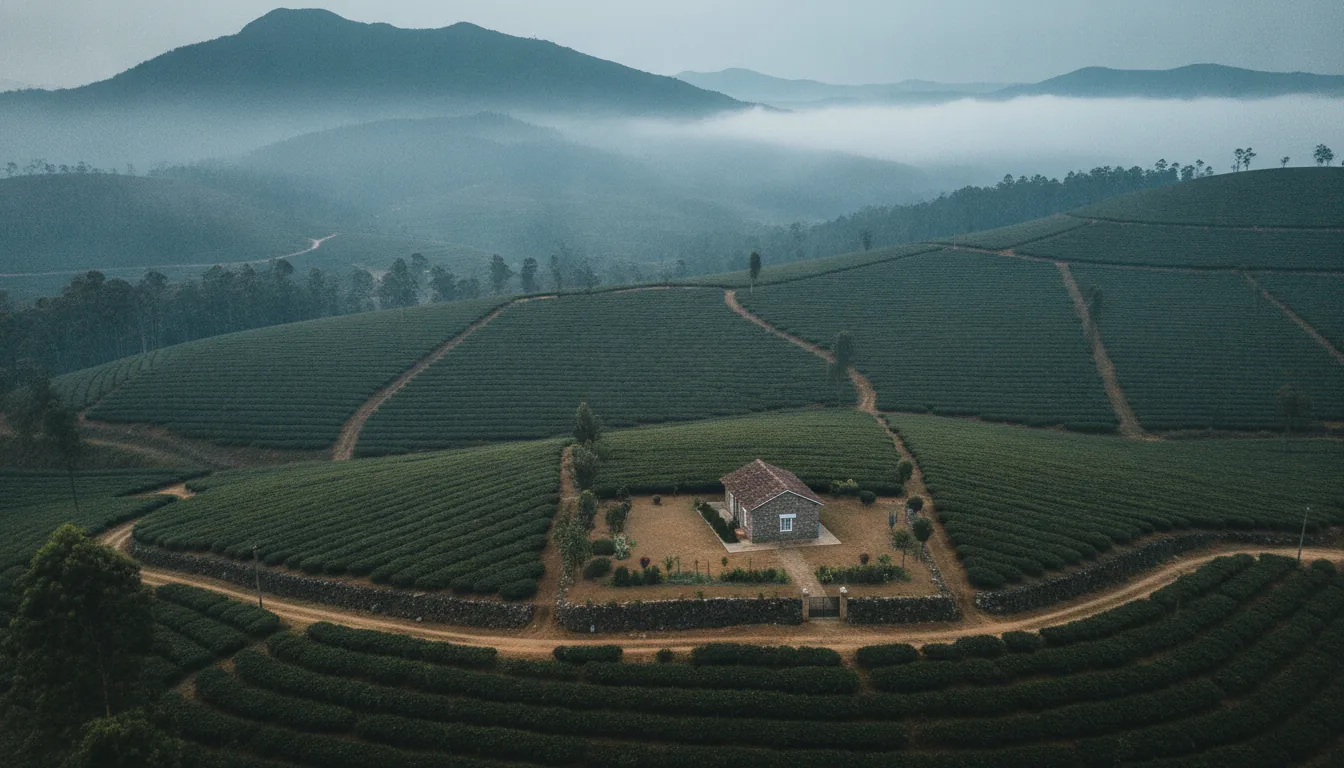
With managed farmland, someone else farms the land and sells the harvest on your behalf. That changes the shape of the tax question. When you cultivate a plot yourself and sell your own produce, the income has one clear source. When the land is managed for you, the money you receive comes through an arrangement, so whether it is treated as agricultural income depends on how that arrangement is written. That is a question for your CA, not something this page can settle.
What decides it is the paperwork. The terms of your maintenance agreement, and how the harvest is marketed on your behalf, are what a Chartered Accountant (CA) reads to answer the question. Two owners with different agreements can get different answers, even on the same estate.
So the practical step is not to guess the treatment. It is to have the documents ready. Keep your maintenance agreement and your annual yield statement to hand, because those are what your CA will ask for. A good conversation with a CA starts with the right records in front of them, which is where a little preparation pays off.
What to gather before you talk to your CA
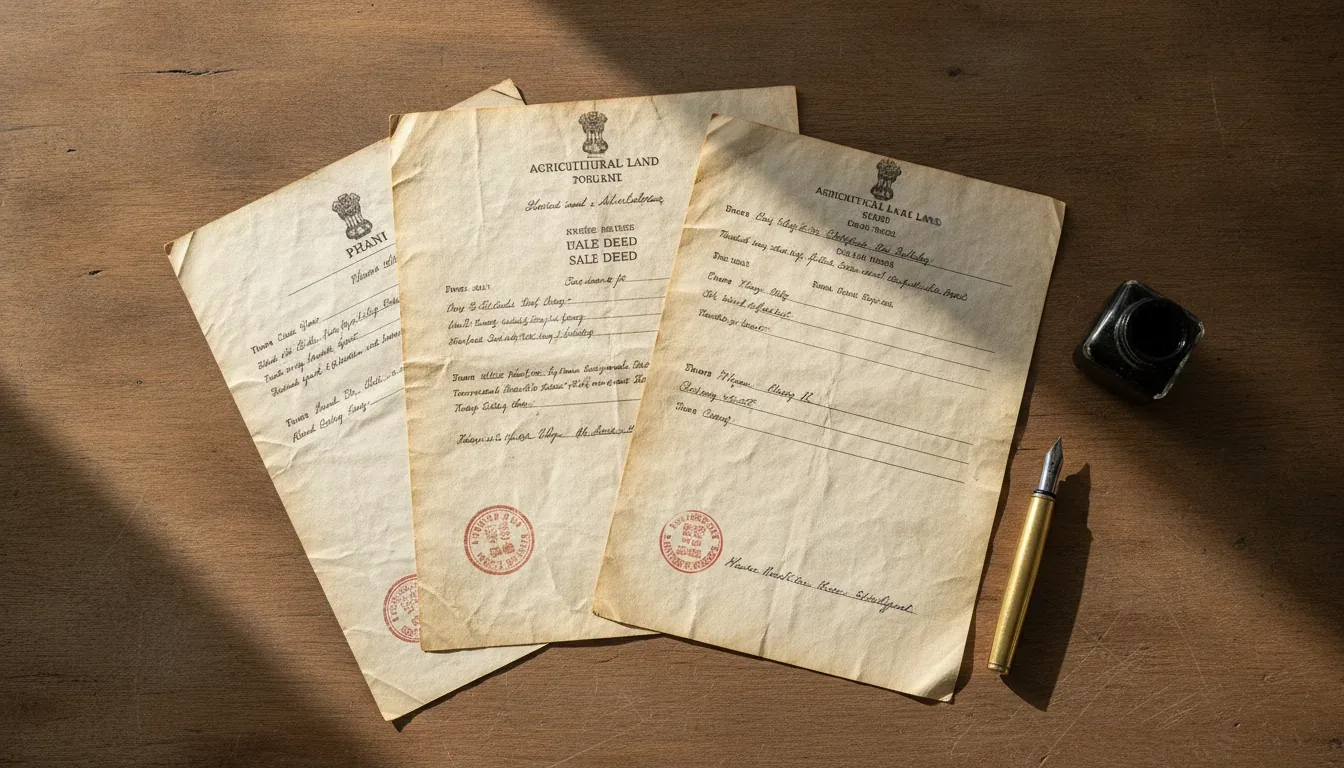
Your land records decide most of the answer, so gather them before you see your CA. A CA can only give a current, personal reading once they can see the papers that fix your land's classification, its use and its history. Bring these:
-
RTC (pahani), the record of rights, tenancy and crops for the land.
-
Your sale deed and purchase deed.
-
Any DC conversion order, if the land has been through conversion.
-
The khata for the property.
-
The operator's annual yield statement, if the land is managed for you.
-
Cultivation records or other evidence that the land is being farmed.
Each of these is a document, not a tax position. Handing them over does not commit you to anything; it just lets a CA work from facts instead of guesses. With these records in hand, there is a short list of questions worth putting to them.
The questions to take to your CA
A short list of questions is enough to put to a qualified Chartered Accountant (CA), before you buy, and again before you sell. Ask these, and let the answers come from someone looking at your papers under current law:
-
What is my land's classification: is it rural or urban for tax, and how is that decided in my case?
-
If I sell, is there a capital gains question here, and any TDS to account for?
-
Is the income I receive treated as agricultural income, given the way my arrangement is written?
-
What does the Income-tax Act, 2025 change for a case like mine, compared with the older answers I have read?
-
What records do you need from me to give a firm answer?
Keep the list with your records, and ask your CA the same questions before you buy and before you sell, because your position and the law can both move between the two. The most common versions of these questions come up again and again below, answered the same careful way.