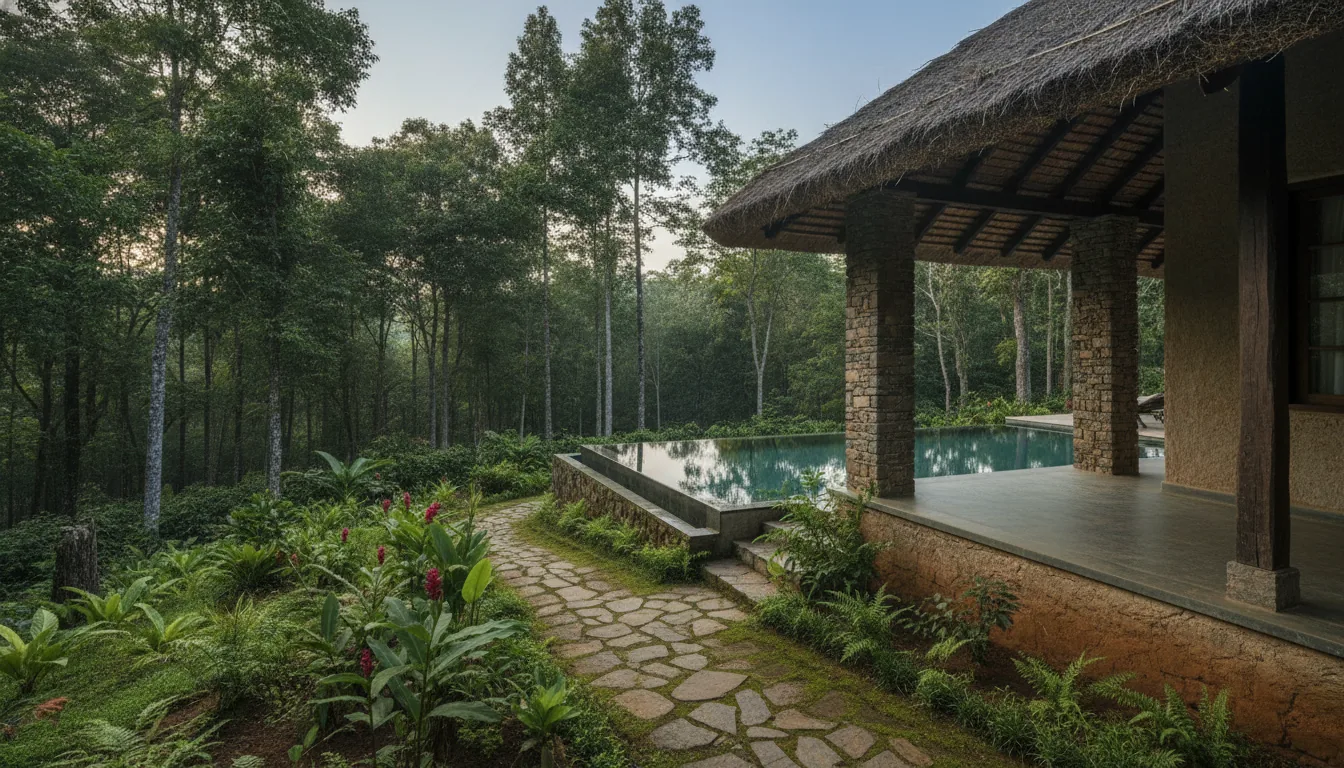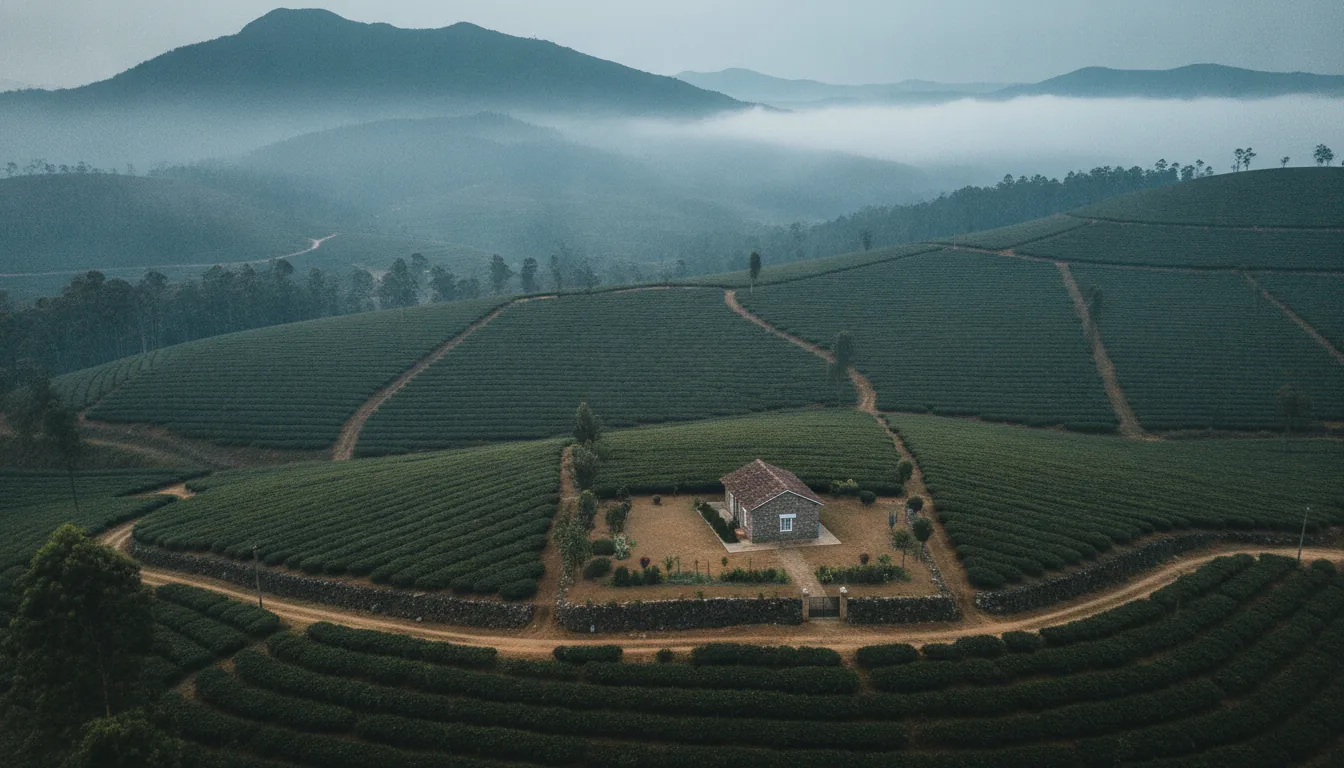
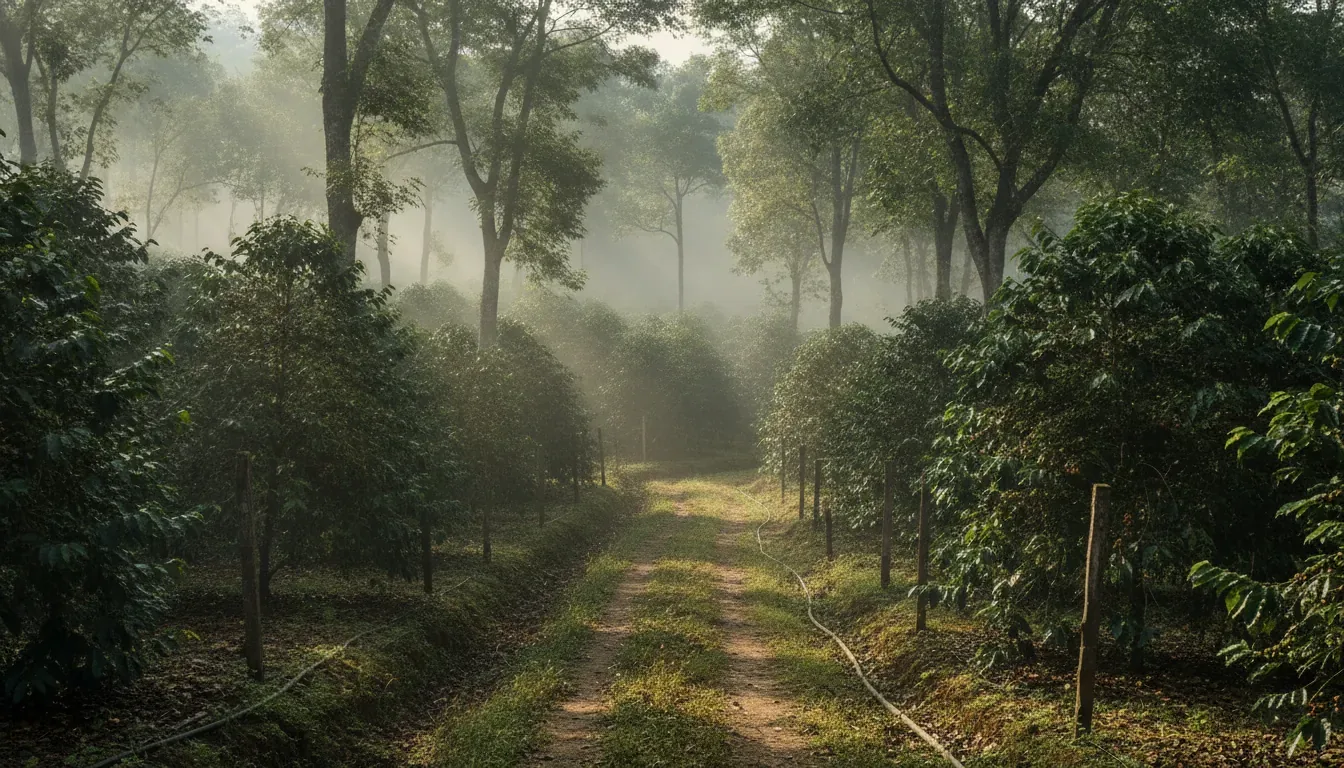

Managed farmland is sold on its first year: the site visit, the registration in your name, the young saplings going into the ground. The fifth year is the one nobody shows you. Year five is the year this guide is about.
If you have been reading managed farmland reviews, you have probably seen the split. The buying experience gets good marks. The ownership years get fewer marks, and the complaints are sharper. So the fair question is not whether the sale goes smoothly. It is what you are left holding once the marketing stops.
This is the honest version, and it comes with two rules. There is no owner story here and no invented example. Everything below is either written in our documents at Vibez Estates or published by someone you can check for yourself.
The short answer
A managed farm plot at year five is land still in your name, trees that are nearing or at their first harvest, a file of annual yield statements, and a running charge set by the maintenance agreement.
-
The title stays yours. You hold the freehold, and the plot does not revert to the developer at any point.
-
The trees reach first harvest around now. Arabica coffee gives its first useful harvest around five years after planting.
-
Your paperwork should be thicker. By year five you should hold one annual yield statement for each year, on top of your sale deed and maintenance agreement.
-
The main cost is the maintenance charge. It is billed on the plot area and set out in your agreement, not decided year to year on a whim.
What does year five actually look like on a managed farm plot
A Vibez Estates managed farm plot, in its fifth year, is still freehold land in your name, run under a separate maintenance agreement. Nothing about year five changes who owns the land. The title is yours from registration onward, and the plot stays agricultural land the whole time.
Here is what year five looks like, in four parts.
-
The land. You hold freehold title, registered in your name. A managed plot starts at 6,500 sq ft, which is roughly six guntha (one guntha is 1,089 sq ft, and an acre is 40 guntha). It is agricultural land, and it stays that way unless you convert it.
-
The trees. Some are bearing their first crop by now. Others, like teak, are decades away from being worth felling.
-
The paperwork. Your file has grown. It should hold a yield statement for each year, on top of the deed and the agreement.
-
The money. There is one running charge, the maintenance charge, and one yearly document that reports the harvest.
Of those four, the trees are the part that changes most from one year to the next.
What have the trees done by year five
Arabica coffee gives its first useful harvest around five years after planting, so year five is often the first real crop, not the tenth. This matters for one reason: a plot's age is counted from when the trees went in, not from when you bought it. Two owners can buy in the same month and be years apart on the trees, depending on the estate. Before you buy, ask when the planting on that estate actually happened.
Here is where each crop tends to be around year five. The dates are from public agronomy sources, listed in the last column.
|
Crop |
What it is doing around year five |
Source |
|---|---|---|
|
Arabica coffee |
Flowers three to four years after planting; first useful harvest around five years. Harvest season runs November to February. |
Wikipedia, Coffee production; TNAU |
|
Black pepper |
Starts bearing usually from the third or fourth year. In the hills, harvest runs January to March. |
Tamil Nadu Agricultural University |
|
Silver oak |
Not a crop. Planted for permanent shade for coffee, and used as a standard for pepper vines to climb. |
TNAU (coffee and pepper pages) |
|
Pomegranate |
Comes into bearing four to five years after planting, so year five is around its first proper yield. |
National Horticulture Board model project |
|
Teak |
A long-horizon tree. Rotation is 40 to 60 years (coppice) or 70 to 80 years (planted), so at year five teak is standing timber, not income. |
Tamil Nadu Agricultural University |
Which of these you have depends on the estate. Vibez Estates grows Arabica coffee, black pepper, teak, pomegranate and silver oak for shade, and the exact mix depends on the estate you are looking at.
No yield figure appears here. What a harvest weighs and sells for depends on the season and the crop, and it is reported to you in the annual yield statement. While the trees grow, the paperwork is growing too, and that file is worth as much as the crop.
What should be in your file by year five
A five-year ownership file should hold the sale deed in your name, the maintenance agreement, and one annual yield statement for each year you have owned the plot. If year five is real, it is real on paper. This is the simplest test of an honest seller: the documents either exist, or they do not.
Here is the checklist for a file five years in:
-
The sale deed, registered in your name. This is your title.
-
The maintenance agreement. This is the separate contract that governs how the plot is worked.
-
An annual yield statement for each year. The harvest is sold by Vibez Estates through Vibez Agro Tech Solutions, and each year's result is reported back to you.
-
The plantation updates you have been sent through the year. How often these are due is set out in your agreement.
-
The land record, the RTC, showing your name. Your name appears on it once mutation is completed, which is the process of updating the record after a sale.
One more point on status. The plot is agricultural land unless it has gone through DC conversion, which is a separate legal step that changes the permitted use. Do not assume conversion has happened; check it in the file.
Of everything in that file, the one document that changes every year is the bill.
What does it cost to keep a plot running, year after year
The Vibez Estates maintenance charge is calculated per square foot per annum on the plot area, and it is set out in the customer agreement. There is no separate rate published here; the number lives in your agreement. What you can weigh now is not the figure but what the charge covers and does not cover, because late discovery of an exclusion is what turns into a complaint.
What the maintenance charge covers:
-
Plantations and common landscaping
-
Internal roads and common access areas
-
Sewage and drainage systems
-
Common infrastructure
-
Routine estate supervision
-
Labour and material coordination for common maintenance
-
Periodic owner updates and issue escalation
What the maintenance charge excludes:
-
Cottage-specific repairs
-
Interiors
-
Utilities
-
Hospitality-operation expenses
-
Owner-requested services
How the cost can change over the years: any revision is supported by actual operating costs and is communicated to owners in advance. The billing frequency and the date it starts are set out in the customer agreement. As the business puts it, commercial terms are project-specific and set out in the agreement.
Paying the charge is most of what an owner has to do. The rest is up to you.
How involved will you actually be
A Vibez Estates owner does not farm the plot. The planting, the upkeep, the harvest and the sale are all done under the maintenance agreement. The way the business states it is plain: you own it, we work it. Owners hold the title, and Vibez handles planting, harvest and sale.
So what is actually yours to do?
-
What you decide: when to visit, whether to build later if the plot allows it, and whether to sell.
-
What you do not have to do: the farming. You do not need to be on site for the work to carry on. It runs under the agreement whether you are there or not.
If you want to see your plot, the team arranges a guided visit and, where available, an overnight stay at the estate. You get plantation updates through the year without having to chase them.
Being able to step back is the point. It is also where the ownership years go wrong, which is the next thing to be honest about.
What goes wrong in the ownership years
Managed farmland reviews split in a clear way: the buying experiences are mostly praised, and the complaints gather in the years after registration. If you only read the five-star buying reviews, you miss the part that matters for year five. Here are the complaints that come up again and again in this category, taken from public reviews, with what to watch for on each.
Maintenance without a clear account
“Heavy maintenance fee and no quality output. No transparency in costs collected.” (public review)
What to watch for: get the covers-and-excludes list in writing before you sign, and ask how revisions are decided.
Terms that change after signing
“Their terms and conditions keep changing every passing months.” (Google review)
What to watch for: check whether the agreement lets terms change without your consent, and how much notice you get.
Development promised and not delivered
“No proper maintenance, no developments as promised.” (Google review)
What to watch for: ask what is contractually committed versus what is only shown in a brochure.
Offices that stop answering
“Their offices do not respond when you want to talk to them.” (Google review)
What to watch for: ask for the escalation route in writing, and test how they respond before you buy.
Updates that go quiet
“Purchase experience was good, but Poor management of plantation with no clear updates.” (Google review of a Bengaluru operator)
What to watch for: confirm the reporting cadence in the agreement, not in conversation.
Two more risks sit with the land itself, not the operator:
Water
“Some areas around Bangalore are hopeless when it comes to ground water.” (Team-BHP forum)
What to watch for: ask about the water source on that specific estate.
Resale
There is a limited organised resale market for this category, so the honest question buyers raise is whether they can actually exit, and who buys this from them. What to watch for: read the resale terms in the agreement, and do not assume a quick sale.
The fair thing to say about Vibez Estates is that its own public reviews show the same pattern as the category: the buying and registration read well, and the harder feedback sits in the ownership years. We are not going to pretend otherwise.
What the good version looks like is also on the record. One Google review reads, “the weekly plantation reports are detailed and honest.” That is the bar. It is not a claim about every estate; it is what to expect and to insist on.
The useful next question is which of these risks the paperwork already covers, and which it does not.
What is fixed in writing today, and what is not
The Vibez Estates customer agreement fixes in writing the maintenance scope, its exclusions, and the rule that revisions follow actual operating costs with notice given in advance. That is worth separating from the things that are not yet fixed, because a promise made in conversation is not the same as a line in a contract.
What is in writing today:
-
The title in your name, through the registered sale deed.
-
The maintenance scope and its exclusions, in the maintenance agreement.
-
The rule that any revision to the charge follows actual operating costs and is communicated in advance.
-
The escalation route for issues, within the maintenance scope.
-
The commencement date and billing frequency, set out in the customer agreement.
What is not yet fixed, and should be read in the agreement before you sign:
-
The reporting frequency, how often plantation updates are due.
-
The term of the maintenance agreement, whether it is perpetual, fixed for a period, or exitable.
-
Response times, how fast the operator is bound to reply.
Where this list says not yet fixed, ask to see it in the agreement before you sign. The surest check of all is to walk an estate that is already years in.
How can you see a year-five estate before you buy
Vibez Estates has completed estates you can walk, so you do not have to take year five on trust. The ones you can ask to visit are Vibez Sirivana in Chikkaballapur, Vibez Coffee Estate in Sakleshpur, and Mythri Farms.
-
Vibez Sirivana, Chikkaballapur, 25 acres, completed.
-
Vibez Coffee Estate, Sakleshpur, 35 acres, completed.
-
Mythri Farms, 15 acres, completed.
When you visit a completed estate, look at the things the maintenance charge is meant to pay for: the trees and how they are kept, the internal roads, the drainage, and the general upkeep. Ask to see an annual yield statement for that estate, and ask how many years old the planting is, because that tells you how close to year five it really is.
For context on the operator behind the estates: Vibez Estates has been operating since 2009, with 25+ projects completed and 1,000+ customers, as at September 2026.
Before you make that visit, here are the questions people ask most.